Summer in Shelby means pool days, and by July regular swimmers notice their hair feels different: drier, rougher, sometimes oddly stiff, and harder to style. The usual explanations passed around the pool deck mix fact and folklore in roughly equal parts, and acting on the folklore can make the real problem worse.
This guide sorts the claims. Chlorine does affect hair and scalp, but not in every way people say, and the practical defenses are simple: saturate before swimming, rinse after, and wear a summer cut short enough that damaged ends do not accumulate. Your barber at Fresh Cutz Barbersh sees the evidence every August, in ends that have taken a full season of water.

What chlorine actually does
Pool water is treated to kill bacteria, and the same chemistry strips the natural oils that coat each hair. Hair is porous, more so when it is dry, damaged, or fine, and it absorbs pool water along with the minerals in it. The result is hair that has lost its protective coating and picked up deposits, which is why it feels like straw and tangles more easily after regular swimming.
The green tint story needs untangling. Chlorine itself does not turn hair green. Copper compounds in pool water, from algaecides and corroded plumbing, bind to hair and leave the tint, and light or fine hair shows it most. Blaming chlorine alone sends people to the wrong fix, since clarifying the mineral buildup is the relevant step, and a barber or a swim-specific shampoo handles it better than extra washing with a harsh everyday shampoo.
| Claim | Verdict | What is actually happening |
|---|---|---|
| Chlorine turns hair green | Myth | Copper compounds in the water bind to hair; chlorine gets the blame |
| Dry hair absorbs more pool water | Fact | Porous, dry hair soaks up treated water like a sponge |
| Wetting hair before swimming helps | Fact | Saturated hair takes in far less pool water |
| Short hair needs no pool care | Myth | Less hair to damage, but the scalp still needs rinsing and sun cover |
| Daily hard shampooing fixes pool hair | Myth | It strips dry hair further; rinse always, wash gently |
| A swim cap is only for serious swimmers | Myth | It is the single most effective barrier for anyone in the water weekly |
The myths that cause damage
The claim that you should shampoo hard after every swim is half right and mostly harmful in practice. Rinsing promptly with clean water matters a great deal. Scrubbing with a strong shampoo daily for a whole summer strips already dry hair further. Rinse every time, wash gently when needed, and use conditioner more often than instinct suggests.
The claim that short hair is immune is false. Short hair gives chlorine less material to damage and gets cut away sooner, which is a real advantage, but the scalp takes the same exposure either way, and a tight fade leaves more scalp open to sun at the pool. Sunscreen on exposed scalp and a hat out of the water are not optional extras for faded swimmers in the North Carolina sun. They are the routine.
The practical swimmer's routine
Wet your hair thoroughly with clean water before getting in. Hair that is already saturated absorbs far less pool water, the same way a wet sponge takes up less than a dry one. A swim cap works even better for long sessions and lap swimmers. After swimming, rinse again as soon as is practical, and wash with a gentle shampoo later that day rather than letting treated water dry in the hair repeatedly.
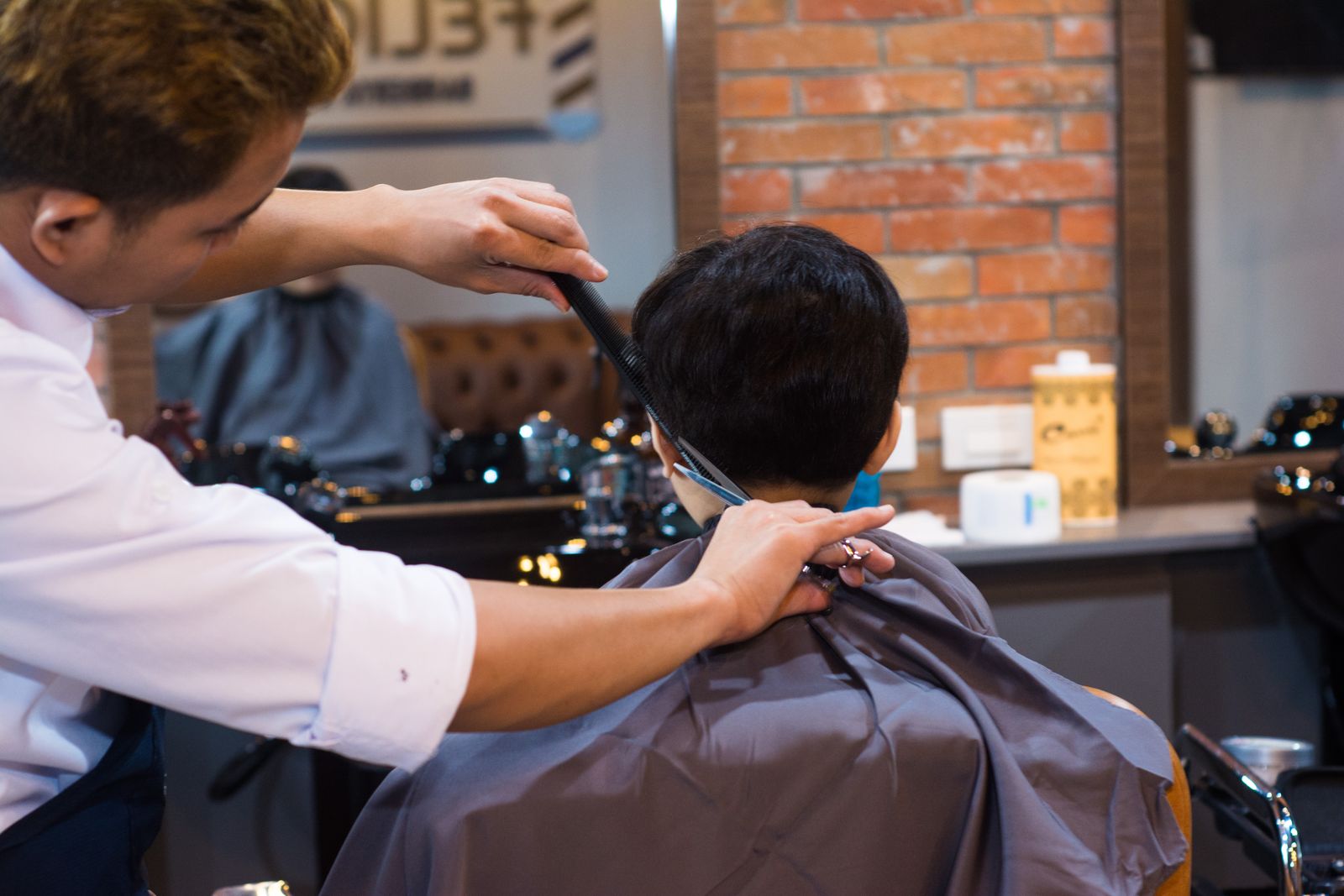
Choose a summer cut that shortens the exposure window. Hair cut every three to four weeks sheds its oldest, most treated ends on schedule, so damage never builds a full season deep. Tell your barber you swim regularly. The advice will be consistent: shorter, simpler, and nothing that depends on heavy product, which pool water removes by the second lap anyway.
Keeping it up between visits
Photos help, with one caution. A reference picture shows the destination, but your hair type, growth pattern, and hairline decide whether that destination is reachable. Bring two or three photos rather than one, ideally of hair similar to yours. A barber can then point to the parts that will transfer directly and the parts that will need adapting, before any hair comes off.
At home, less is usually more. Wash when the scalp needs it rather than on a fixed daily habit if your hair runs dry, rinse well, and keep product amounts small. A pea-sized amount worked through dry or slightly damp hair does more than a large amount dumped on wet hair. If a style needs ten minutes of work every morning to look right, it is the wrong style for most weekdays, whatever it looked like leaving the shop.
Common questions
How can I tell if my hair has mineral buildup?
It feels coated or stiff even after washing, tangles at the ends, and may look dull or slightly tinted if it is light. Mention swimming to your barber, who can feel the difference immediately and advise on clarifying.
Is lake or river swimming gentler than a pool?
Usually, yes, since there is no treated water, though sun and repeated wetting and drying still dry hair out. The rinse-after habit is worth keeping for any regular swimming.
Should I change shampoo just for summer?
A gentler shampoo plus regular conditioner covers most swimmers. Men in the pool several times a week may benefit from a swim or clarifying shampoo once a week, not daily.
Photos in this guide are representative stock images.
← All guides from Fresh Cutz Barbersh← Back to Fresh Cutz Barbersh